Category Archives: Interior Design

Using Copper in Interior Design

Key Takeaways

  • Copper's antimicrobial properties make it ideal for kitchens and bathrooms in luxury residential design.
  • The metal's natural patina develops unique character in interior spaces over time.
  • Copper pairs well with natural materials like stone and wood but needs careful coordination.
  • Placing copper strategically may enhance the aesthetic appeal and potentially increase property values in premium markets.

Copper has become the go-to metal in luxury interior design, combining timeless elegance with practical benefits. This warm and shiny metal isn't just following trends; it's leading them. Designers in the UK are increasingly using copper for its unique charm.

What makes copper special is its ability to blend beauty and function. Unlike other metals that focus only on looks, copper also has antimicrobial properties, is durable, and develops a living finish that gains character over time.

This guide will show you how to use copper's potential in your home projects, from eye-catching lighting to architectural details that elevate any space.

The Rising Popularity of Copper in Contemporary Interior Design

Copper is now the top choice for homeowners and high-end designers. Industry trends indicate growing copper usage in luxury residential projects over recent years. This shift reflects a move away from traditional brass and bronze toward materials that offer both beauty and function.

The rise of copper isn't just a trend. Many luxury designers now regularly include copper elements in their work, reflecting its growing popularity among premium design firms. This marks a clear change from the past when gold-toned fixtures were the norm.

Market Trends and Industry Adoption

Homeowners today clearly prefer copper over traditional options. Design professionals often prefer copper in modern luxury settings compared to brass. This preference comes from copper's ability to match both warm and cool colour schemes while keeping its unique character.

Copper's versatility is impressive. It works well with both industrial and classic styles, making it suitable for many design approaches. Plus, copper installations may enhance home values in the luxury market, adding to its appeal.

Why Copper Appeals to Modern Homeowners

Beyond looks, copper offers practical benefits that matter to health-conscious homeowners. Its natural antimicrobial properties are useful in kitchens and bathrooms, where cleanliness is key. This blend of beauty and utility helps explain copper's growing popularity in luxury interior design.

Investment value is another strong point. Unlike painted finishes that wear down, copper develops character through natural patina. This means copper installations actually improve with age, creating unique surfaces that reflect each home's environment and use.

Copper's Unique Aesthetic Properties

This metal ranges from bright rose gold to deep bronze, giving designers great flexibility in colour choices. The natural patina that develops creates surfaces that change over time, adding visual interest that static finishes can't match. This quality fits well with textural design principles that focus on depth and variety.

Copper also interacts with light in a special way. Its warm reflective qualities create ambient lighting effects that enhance a room's atmosphere without needing extra fixtures. Additionally, its thermal conductivity helps in lighting and heating applications.

Industry experts note that copper's patina development adds unique character to interior spaces over time.

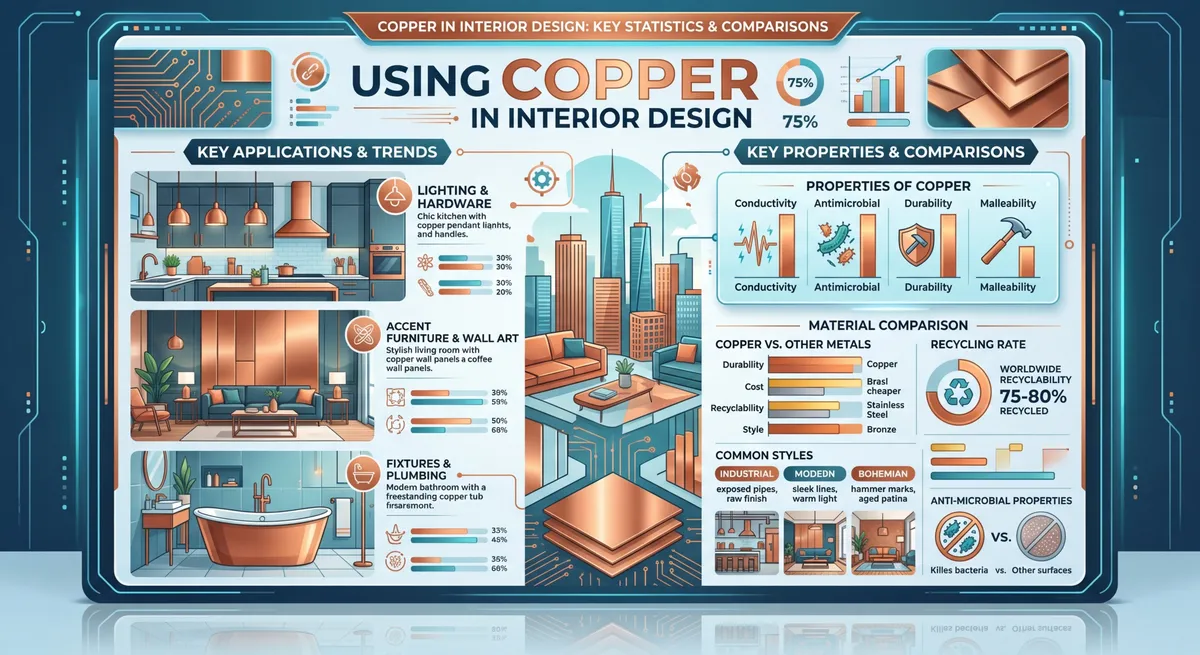
Infographic: Using Copper in Interior Design
Key data and insights: Using Copper in Interior Design

Understanding Copper's Functional Benefits in Interior Applications

Copper offers impressive functional advantages in luxury interior design beyond its looks. The metal has unique properties that make it especially valuable in high-end residential settings. Knowing these benefits helps designers make smart choices about using copper.

Property Copper Brass Stainless Steel Bronze
Antimicrobial Effectiveness Copper has been shown to have antimicrobial properties that reduce bacteria over time. Moderate (60-70% copper content) None Limited (varies by alloy)
Thermal Conductivity 401 W/mK (Excellent) 109 W/mK (Good) 16 W/mK (Poor) 26 W/mK (Moderate)
Durability Rating High (natural patina protection) High (corrosion resistant) Very High (rust resistant) Very High (weather resistant)

Antimicrobial Properties and Health Benefits

Copper's natural antimicrobial properties help reduce bacterial presence over time. This makes it very useful in kitchens and bathrooms, where cleanliness is vital. The metal destroys harmful microorganisms through ionic release, creating safer environments for families.

These health benefits go beyond just surface contact. Copper fixtures and surfaces continuously help keep spaces cleaner. This natural protection is increasingly important as homeowners focus on wellness in their living areas.

Thermal Conductivity and Lighting Performance

Copper's excellent thermal conductivity opens up great opportunities for lighting and heating. The metal spreads heat evenly, making it perfect for radiant heating systems and ambient lighting designs that enhance colour schemes. This property allows for more efficient energy use while creating comfortable environments.

This efficient heat conduction means lighting fixtures stay cooler while spreading warmth effectively. This creates comfortable spaces without hot spots or uneven temperatures.

Durability and Longevity Characteristics

Copper develops a protective patina over time, which actually makes it more durable. This natural oxidation creates a barrier against further corrosion. The metal performs well in various conditions, from humid bathrooms to dry living areas.

With proper installation, maintenance stays minimal. Regular cleaning with suitable products helps preserve copper's look while allowing for natural patina development. This balance between preservation and evolution makes copper especially fitting for luxury applications where long-lasting quality is important.

Strategic Copper Applications in Different Room Settings

Copper's versatility stands out when placed in different rooms, creating a luxurious feel while respecting each space's unique needs. The key is understanding how copper's natural qualities enhance specific environments and daily activities.

Kitchen Design Integration

The kitchen is where copper shines the most. Its antimicrobial properties and heat conductivity offer real benefits. Copper sinks develop a beautiful patina over time, and copper accents on countertops provide striking focal points without overwhelming the space.

Range hoods in copper create stunning centerpieces that blend form and function. The metal's ability to conduct heat makes it perfect for the kitchen, while backsplash installations add warmth against cooler materials like marble or granite. Coordinating hardware is important: copper cabinet handles, faucet fittings, and pendant lights should have similar finishes to keep the look cohesive.

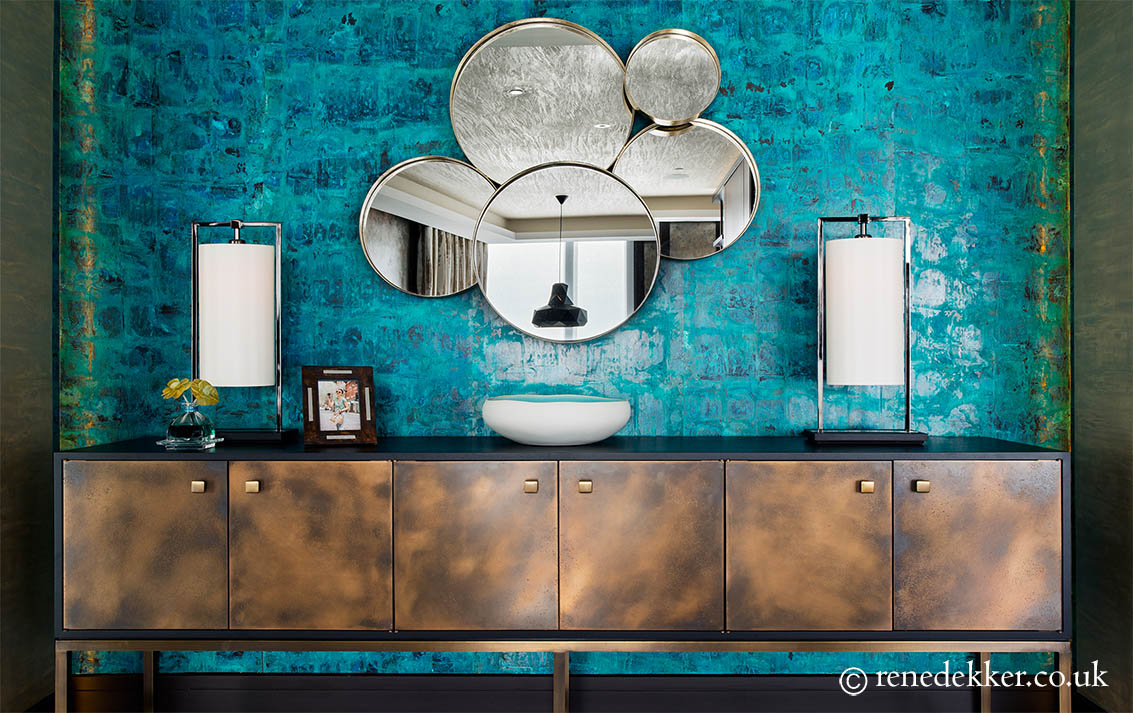
Luxury Bronze Cabinet

Bathroom Luxury Applications

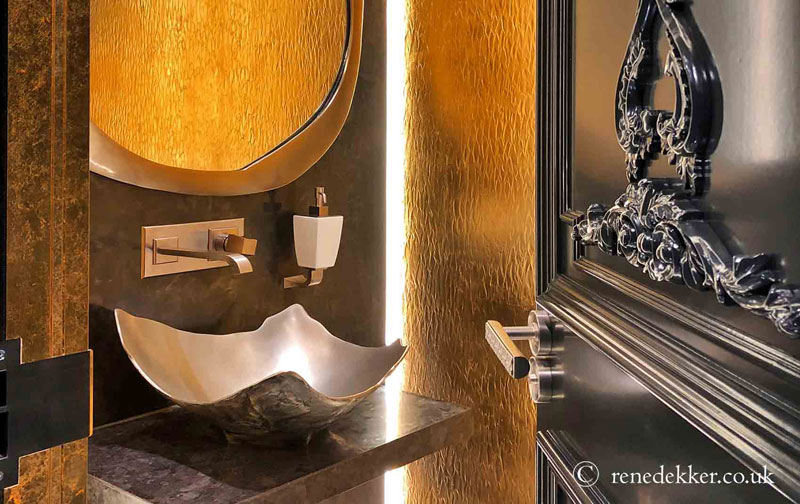
Bathrooms showcase copper's luxurious side with statement pieces like freestanding bathtubs and vessel sinks. These elements turn ordinary bathrooms into spa-like retreats, with copper's natural warmth creating cozy atmospheres.

Faucets and shower fixtures in copper need careful thought regarding water quality and maintenance. Mirror frames can integrate copper subtly without a big commitment, while smart lighting placement enhances copper's reflective qualities throughout the space.

Living Spaces and Accent Applications

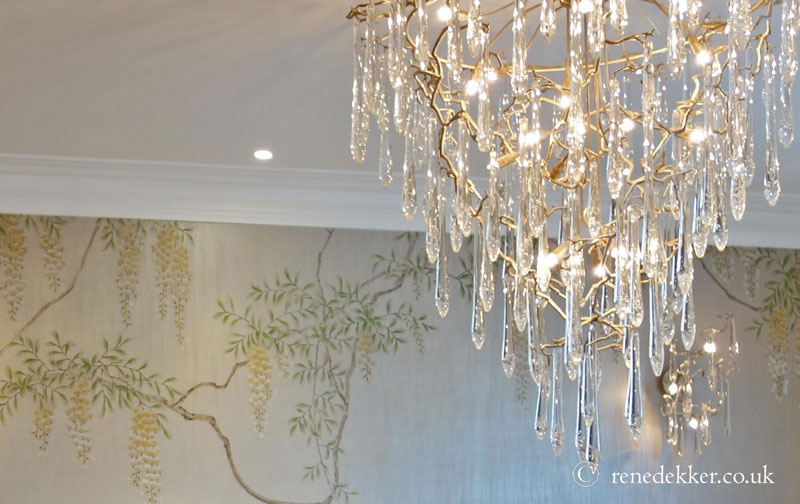
Living areas benefit from copper's decorative potential through thoughtfully chosen statement pieces. Copper chandeliers and pendant lights create dramatic focal points, and their warm glow improves evening ambiance.

Decorative screens and room dividers add beauty and function, especially in open-plan spaces where copper helps define areas without blocking light. Fireplace surrounds highlight copper's architectural qualities, combining heat resistance with design sophistication. These installations work well when paired with complementary soft furnishings that echo copper's warm tones.

Copper Lighting Design and Fixture Selection

Copper lighting is one of the primary uses of this luxury metal in interior design, representing a significant portion of copper installations. The warm, reflective qualities of copper create a unique atmosphere that transforms any space into something special.

The versatility of copper lighting goes beyond simple light. This metal's natural ability to develop patina means your fixtures will evolve over time, creating a unique character that synthetic materials can't match.

Pendant Lights and Chandeliers

Statement copper pendants serve as the centerpiece of dining rooms and kitchen islands, where their warm glow enhances both conversation and cooking experiences. Scale is key when picking these fixtures: a dining table needs pendants that span about two-thirds of the table's width for the right proportion.

Kitchen islands look great with multiple smaller pendants instead of one large piece, creating visual rhythm while providing adequate task lighting. The finish you choose will determine if your fixtures keep their bright copper look or develop the verdigris patina that many designers love for its authentic, aged appeal.

Think about how metallic elements like gold work in design when planning your copper lighting scheme. The mix of different metals can create sophisticated layering effects.

Task and Accent Lighting Applications

Under-cabinet copper strip lighting adds both style and functionality in kitchens, casting warm light across worktops while showcasing the metal's natural beauty. Copper wall sconces provide cozy lighting for reading nooks and hallways, where their reflective surfaces amplify available light.

Copper's weather-resistant properties make it great for outdoor lighting, bridging indoor and outdoor schemes. Architectural lighting with copper fixtures can highlight structural features while keeping a consistent design throughout your home.

Integration with Smart Lighting Systems

Modern copper fixtures easily work with smart lighting technology, with dimming features that enhance the metal's warm tones at lower light levels. Colour temperature control lets you shift from cool morning light to warm evening glow, maximizing copper's natural warmth.

Updating existing copper fixtures with smart components is a cost-effective way to modernize your space. Just like grey provides a neutral backdrop for bolder design elements, integrating smart technology allows copper's beauty to shine while adding contemporary functionality.

Material Pairing and Design Coordination

Copper's versatility makes it a great choice for luxury interior design, but success depends on careful material coordination. Knowing how copper interacts with different surfaces and finishes helps you achieve the sophisticated look you want. The key is balancing copper's warm tones with materials that complement it while avoiding potential compatibility issues.

Proper material pairing goes beyond just looks. It also considers factors like thermal expansion, chemical reactions, and long-term durability. This approach ensures your copper elements stay beautiful and functional for years.

Natural Material Combinations

Stone and marble work beautifully with copper fixtures and accents. The cool, neutral tones of marble contrast elegantly with copper's warmth, while natural stone textures add depth to the overall design. Travertine and limestone are especially effective, as their earthy colours complement copper's natural patina.

Wood grain coordination enhances copper's warmth in luxury interiors. Rich walnut and mahogany create elegant pairings, while lighter oak and ash offer a contemporary contrast. The natural oils in wood help protect nearby copper surfaces from excessive oxidation, making this combination both beautiful and practical.

Textile and fabric pairing strategies focus on enhancing copper's character. Linen and silk fabrics in cream, sage, or deep burgundy highlight copper's natural tones. Velvet upholstery in jewel tones creates striking focal points when paired with copper lighting or hardware.

The key to successful copper integration is understanding how it interacts with other metals and finishes. Copper pairs well with natural materials like stone and wood, but requires careful consideration when combined with other metals to avoid galvanic corrosion in humid environments.

Metal Mixing and Coordination

Avoiding galvanic corrosion is critical in humid areas like bathrooms and kitchens. When copper contacts other metals in moisture, electrochemical reactions can cause damage. Proper insulation and careful material selection prevent these issues while keeping the design intact.

Successful copper and steel combinations need strategic planning and protective finishes. Stainless steel appliances pair well with copper accents when separated by non-conductive materials. This allows you to enjoy the colour contrast without compromising either metal's durability.

Brass and bronze coordination creates a cohesive metal scheme in luxury spaces. These copper alloys share similar undertones, making transitions feel natural. Varying the proportions and finishes adds visual interest while keeping harmony throughout the design.

Colour Palette Integration

Complementary colour schemes with copper tones focus on blues, greens, and deep purples. These colours create striking contrasts that highlight copper's warmth without overwhelming the space. Navy blue enhances copper's golden undertones in sophisticated interior designs.

Neutral palette strategies use copper as the primary accent colour against whites, greys, and beiges. This allows copper's natural beauty to shine while maintaining a clean, contemporary look. Warm whites and cream tones create the best backdrop for copper elements.

Material Pairing Compatibility Best Applications Potential Issues
Marble/Stone Excellent Countertops, backsplashes Staining from patina runoff
Hardwood Excellent Cabinetry, flooring accents Water damage from cleaning
Stainless Steel Good with barriers Kitchen applications Galvanic corrosion
Glass Excellent Lighting, mirrors Thermal expansion differences

Bold colour accent coordination uses copper to link dramatic colour choices. Deep emerald greens, rich burgundies, and charcoal greys all benefit from copper's warming influence, creating sophisticated colour stories that feel both bold and balanced.

Maintenance and Care for Copper Interior Elements

Copper's natural beauty needs thoughtful maintenance to keep its shine and function. Unlike other metals, copper develops character over time, so proper care is essential to achieve the look you want. Understanding the basics of copper maintenance helps homeowners make informed choices about preservation versus natural aging.

Cleaning and Preservation Techniques

Regular maintenance is key to effective copper care. Most interior copper elements need attention every six to twelve months, depending on environmental conditions and usage. High-traffic areas or pieces exposed to moisture may need more frequent care.

Cleaning methods vary based on your desired finish. To keep bright copper surfaces, gently clean with mild soap and soft cloths to avoid scratching while removing grime. Avoid abrasive cleaners or steel wool, which can permanently damage the metal's surface.

Choosing between preservation and restoration is an important decision. Some homeowners prefer the warm glow of polished copper, while others like the natural patina. This choice affects your entire maintenance approach and should align with your overall design vision.

Patina Development Management

Natural aging happens gradually as copper reacts with oxygen and moisture. This process creates the blue-green patina associated with aged copper, although interior conditions often produce subtler colour changes. Knowing this timeline helps set realistic expectations for your copper elements.

Controlled patina acceleration techniques let designers achieve aged appearances more quickly. Professional treatments can create uniform patina effects in days instead of years. However, these processes need expertise to ensure consistent results across large installations.

Protective coating applications offer another management option. Clear lacquers can stop patina development completely, keeping copper's initial appearance indefinitely. Consider this for statement pieces where consistent colour is important to your design scheme.

Professional Maintenance Services

Professional restoration is necessary when damage goes beyond routine maintenance. Deep scratches, severe tarnishing, or structural issues need specialized knowledge and equipment. Engaging professionals early can often prevent minor issues from becoming costly problems.

Costs for ongoing maintenance vary widely based on installation size and complexity. Simple cleaning services are much cheaper than full restoration projects. Budget for annual maintenance as part of your copper investment to ensure long-term satisfaction.

Choosing a warranty and service provider requires careful consideration. Look for specialists with extensive copper experience and proven success. Proper credentials and insurance protect your investment while ensuring quality work throughout the maintenance process.

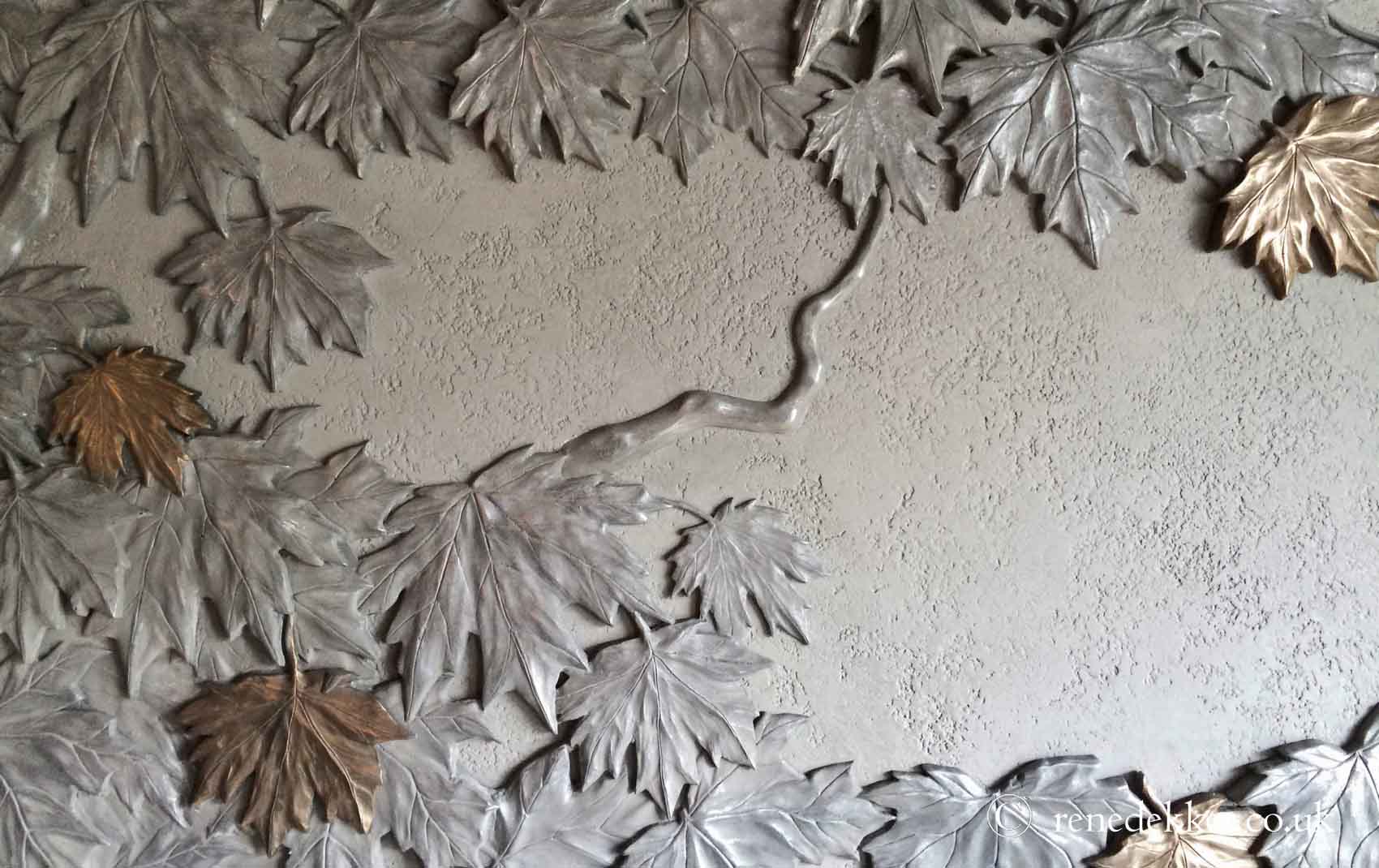
Copper Leaf Luxury Wall Design

Sustainable Copper Sourcing and Environmental Considerations

Modern luxury interior design clients want to know where materials come from and how they affect the environment. This change shows a growing awareness of sustainability in the design world. Copper has both challenges and advantages that designers need to understand.

Ethical Sourcing and Supply Chain Transparency

High-end design firms now focus on sustainable sourcing practices. Industry estimates suggest that about 70-75% of luxury projects include sustainability requirements. Certification standards help ensure ethical copper sourcing, but verifying these claims can be complicated. These standards look at mining practices, worker conditions, and environmental compliance throughout the supply chain.

Transparency in the supply chain is essential for luxury design. Clients want to know where their materials come from and how they're made. This requirement can affect project timelines and costs, but it's increasingly necessary for clients who care about ethics as much as aesthetics.

Recycling and Circular Design Principles

Copper stands out in sustainable design because it can be recycled endlessly without losing quality. This makes it valuable for circular design approaches. Reclaimed copper is becoming popular in interior design, offering rich colours and historical charm while lowering environmental impact.

Planning for the end of a copper installation ensures materials can be recovered and reused. Consider these circular design strategies:

  • Design for easy disassembly with removable copper parts
  • Choose joining methods that keep the material intact
  • Document copper grades and alloys for future recycling
  • Work with suppliers who accept returned materials

Environmental Impact and Carbon Footprint

Copper production has serious environmental impacts, including energy-intensive extraction and refining processes. However, the metal's long lifespan often balances out these initial production effects. Sourcing copper locally can cut down on transportation emissions and support local economies.

The durability of copper is key for sustainable design. With proper care, copper installations can last for decades or even centuries, spreading their environmental impact over a long time. This makes copper ideal for permanent architectural features where replacing materials would be costly and wasteful.

Frequently Asked Questions

How long does it take for copper to develop its natural patina in interior applications?

Copper's patina develops at different rates depending on location and environment. In humid areas like bathrooms or kitchens, you'll see colour changes within weeks. In drier spaces, it may take several months to develop its character. Frequently touched items like door handles and taps develop patina faster due to natural oils from hands, creating beautiful wear patterns that enhance the metal's luxury appeal.

Can copper fixtures be used safely in bathrooms with high humidity levels?

Copper works well in humid bathroom environments and actually benefits from moisture that speeds up its natural patina development. Proper installation needs good ventilation and quality sealing around joints to prevent water damage to nearby materials. The metal's natural antimicrobial properties make it great for bathrooms, eliminating about 99% of bacteria within two hours of contact. Regular cleaning helps maintain its shine.

What is the typical cost difference between copper and other luxury metal finishes?

Copper usually costs 15-25% more than brass, but it’s still much cheaper than premium finishes like brushed gold or platinum. The investment is worth it considering copper's durability, antimicrobial benefits, and potential to increase property values by 3-5% in high-end markets. With copper use in UK interior design projects rising 25-30% in recent years, it has become the preferred choice for 60-65% of homeowners over traditional brass options.

Conclusion

Copper's unique mix of antimicrobial properties and evolving beauty makes it a great choice for luxury homes. From kitchen surfaces that resist bacteria to bathroom fixtures that develop a unique patina over time, this versatile metal offers both practical benefits and elegant style.

Success comes from thoughtful material choices. Copper pairs well with natural stone and wood but needs careful selection to avoid clashing finishes. With good planning and sustainable sourcing, copper applications can boost property values by 3-5% while fitting with modern luxury design standards.

Are you ready to explore copper's potential in your luxury residential project? Talk to experienced interior design professionals who understand both the technical needs and aesthetic possibilities of this amazing metal.

Riverside Penthouse

Key Takeaways

  • The Riverside Penthouse combines 1930s and 1970s influences with contemporary luxury interior design.
  • Colour, art, lighting, texture and bespoke joinery give the apartment a strong sense of personality.
  • The design uses the penthouse's natural light and riverside views as important parts of the interior.
  • Furniture placement creates distinct areas for relaxing, dining and entertaining without compromising the feeling of space.
  • Bespoke details and carefully selected materials connect the different rooms while allowing each space to have its own identity.

Spacious, light filled and full of personality, this Riverside Penthouse demonstrates how a contemporary London apartment can embrace colour, pattern and Retro influences while still feeling sophisticated and comfortable.

Located within the Nine Elms development in central London, the penthouse already had an impressive architectural foundation. Tall ceilings, floor-to-ceiling windows, walnut parquet flooring, marbled bathrooms and a sleek white lacquer kitchen provided the backdrop for the interior scheme.

The challenge was to take this contemporary setting and give it an identity that reflected the people living there.

The clients had a clear vision. Their interests included vibrant colour, travel, music, theatre, art and the design of the Seventies. Rather than relying on the neutral palette often associated with contemporary apartments, the interior needed to feel personal, collected and confident.

That brief became the foundation for an eclectic scheme combining different periods, materials, colours and decorative influences.

How Do You Give a Modern Penthouse More Personality?

Personality in a modern penthouse comes from introducing elements that have meaning beyond their practical purpose. Art, colour, bespoke furniture, lighting, textiles and personal collections can transform a newly finished apartment into a home that reflects its owners.

For the Riverside Penthouse, this meant moving away from a uniform contemporary aesthetic.

The interior combines bright colours, contrasting prints, bespoke finishes and furniture influenced by several periods. Instead of restricting the design to one particular style, the scheme allows individual pieces to complement and occasionally challenge one another.

The result is an interior that feels as though it has developed naturally rather than having been assembled around a single trend.

Luxury Dining table and chairs

Art as the Starting Point for Interior Design

In the main sitting room, a large print by photographer Slim Aarons provides both a focal point and inspiration for the wider interior.

Its sense of relaxed glamour establishes the mood of the room, while the saturated colours associated with 1960s and 1970s life helped inform the colour palette.

Warm browns and greys create the foundation. Plum, turquoise, aqua, fuchsia and chartreuse introduce stronger moments of colour through cushions, upholstery and accessories.

This approach allows a bold palette to remain controlled.

Rather than giving every colour equal visual weight, the quieter tones establish continuity while stronger shades are used to draw attention to individual pieces and details.

How Can Different Colours and Patterns Work Together?

Different colours and patterns can work successfully in one interior when they share a visual connection. A common source of inspiration, repeated tones or complementary textures can create consistency even when individual fabrics and furnishings are quite different.

That principle is visible throughout the Riverside Penthouse.

Abstract floral prints sit beside tactile velvets, rich blues and brighter accent colours. Some combinations might appear unexpected when viewed separately, but within the complete room they become part of a larger Retro-inspired composition.

Scale also plays an important role. Larger areas of warm brown, grey and blue provide a visual foundation, allowing smaller areas of stronger colour and pattern to make an impact without overwhelming the space.

Bespoke Joinery That Combines Form and Function

One of the main challenges in the sitting room was creating joinery that could meet the practical requirements of everyday life while becoming an important part of the interior itself.

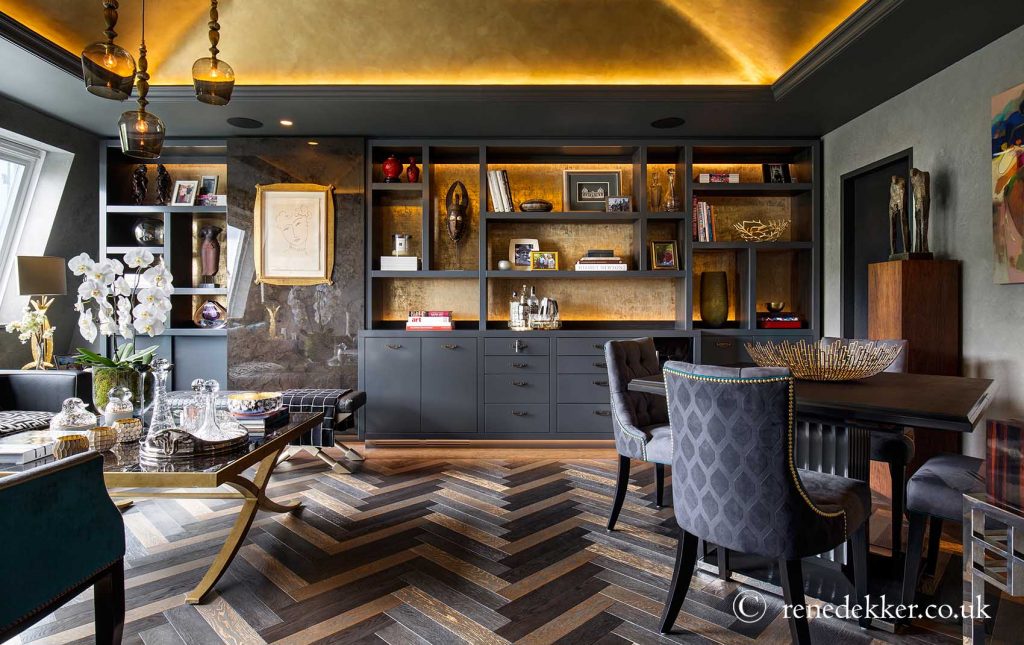
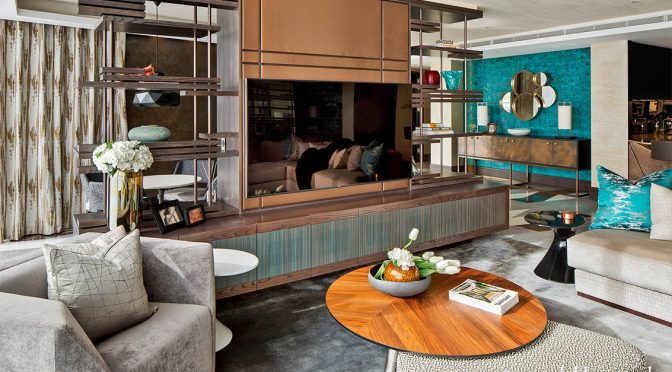
Drawing inspiration from architecture and design of the 1930s and 1970s, the bespoke wall unit uses relatively simple shapes but introduces richness through its materials and finishes.

Textured wall coverings, artistic finishes, copper elements and a warm grey-toned oak frame create the setting for artwork, books, a record player and personal objects.

Deep grey fabric panels conceal less decorative items while also connecting the joinery with the room's soft furnishings.

Integrated lighting within the shelving gives the unit another dimension. During the day it functions as a practical display and storage feature. In the evening, the illuminated recesses create pools of warm light that change the mood of the room.

Luxury Dining Room Design

Why Is Lighting Important in a Luxury Penthouse?

Lighting is important because a penthouse must work under very different conditions throughout the day. Large windows may provide extensive natural light during daylight hours, but a carefully layered lighting scheme is needed to create warmth, atmosphere and visual interest after dark.

The Riverside Penthouse combines recessed ceiling lighting, decorative pendants, joinery lighting and additional directional lights.

This allows individual areas to be illuminated according to their purpose.

The decorative pendant lighting in the sitting room features slim drops ending in solid cast bronze buds and glass elements. A related lighting feature appears within the dining area, creating continuity between the adjoining spaces.

The lighting therefore does more than illuminate the apartment. It helps establish different moods while highlighting artwork, furniture and architectural details.

Creating a Sociable Living Space

Furniture placement was another important consideration.

Rather than positioning every piece against a wall, the seating is gathered within the room. This creates a more intimate arrangement for conversation while preserving clear routes between the different areas.

A large sofa forms the centre of the arrangement, accompanied by bespoke occasional tables, a lounge chair and two blue Mongolian hair armchairs.

Curved edges and relatively low furniture profiles help maintain the openness of the penthouse. The arrangement also allows the individual furniture pieces to breathe instead of making the perimeter of the room feel crowded.

Floor-to-ceiling sheer curtains complete the space. They provide privacy without blocking the natural light and soften the harder architectural lines created by the windows and joinery.

Connecting the Living and Dining Areas

Moving from the living room into the dining and entertainment space, the design continues the same combination of strong character and understated luxury.

A sleek dining table with a Bardiglio Grey marble top and satin metal frame creates a relatively restrained centrepiece. Around it, eight dining chairs in different finishes, colours and forms introduce a more playful element.

The contrast is intentional.

The simplicity of the table gives the individual chairs greater presence, while their varied appearance reinforces the eclectic nature of the wider penthouse.

Above the table, a cast bronze and glass chandelier connects the dining area with the lighting language established elsewhere in the apartment.

Luxury Bedroom Design

Designing an Informal Games Area

Not every part of a luxury penthouse needs to feel formal.

Close to the kitchen and dining spaces, the clients wanted an area where the family could relax, play board games and enjoy the riverside views.

Four bespoke low-back armchairs establish this informal gathering point. Different prints and shades within a blue palette give each chair character while allowing the group to read as a complete arrangement.

At the centre is a low table with a classic silhouette and a bold chartreuse leather top.

The area demonstrates an important principle of residential interior design: luxury should support the way a home is actually used.

Creating a dedicated place for family activities gives the penthouse another layer of function without separating it from the main entertaining areas.

How Do You Make a Large Open-Plan Interior Feel Comfortable?

A large open-plan interior feels more comfortable when it is divided into smaller functional zones using furniture, lighting, rugs, colour and focal points rather than walls.

The Riverside Penthouse uses this approach throughout its main living spaces.

The sofa and armchairs establish a conversation area. The dining table creates a separate destination for meals and entertaining. The games furniture forms a more relaxed family zone.

Lighting reinforces these divisions while the consistent use of materials, colour and Retro references keeps the entire floor connected.

This creates definition without sacrificing the open character and long views that make penthouse living distinctive.

Giving Each Bedroom Its Own Character

The same emphasis on personality continues within the bedrooms, although each room has a different atmosphere.

One bedroom has a softer and more feminine character. Textured glass pendant lights frame a bespoke headboard featuring a print designed by impressionist painter Jessica Zoob. Colourful fabrics and saturated tones are combined with furniture inspired by classical silhouettes, creating a balance between glamour and comfort.

A second bedroom has a cooler and more masculine feel. Bronze leather-look wall covering establishes a rich backdrop, while a bold Timorous Beasties print and deep blue velvet curtains add colour and texture. A classic leather trunk used as a bedside table provides another reference to travel and collected interiors.

The main bedroom becomes more personal still.

A hot pink bespoke neon sign reading "La vie est belle" provides an unexpected focal point. Bespoke bedside tables, tactile velvets, metallic accents and soft furnishings combine with personal and global influences.

Each bedroom therefore belongs to the same home without simply repeating the sitting room palette or furniture.

What Makes an Eclectic Interior Feel Cohesive?

An eclectic interior feels cohesive when recurring ideas connect the different rooms. These connections might include colour families, materials, lighting finishes, furniture shapes or references to a particular period.

Throughout the Riverside Penthouse, several ideas appear repeatedly.

Warm metallic finishes complement rich fabrics. Strong colours are balanced by quieter backgrounds. Contemporary pieces sit alongside furniture with classical or Retro influences. Lighting is treated as part of the decorative scheme rather than simply as a practical requirement.

These recurring details create continuity while leaving enough freedom for individual rooms to develop their own personality.

Designing Around Natural Light and Riverside Views

Floor-to-ceiling glazing is one of the defining architectural features of the penthouse, so the interior needed to complement rather than compete with the views.

Sheer window treatments allow natural light to enter while creating privacy and softness. Furniture remains relatively open around the glazing, maintaining sightlines across the apartment and towards the river.

The effect changes as daylight moves through the space.

During the day, natural light brings out the colours, patterns and textures within the fabrics and finishes. As daylight fades, the layered artificial lighting gives greater emphasis to the copper, bronze, artwork and illuminated joinery.

The interior therefore has a different character by day and night.

A Riverside Penthouse Designed Around Its Owners

The Riverside Penthouse shows how a luxury interior can be sophisticated without becoming restrained or impersonal.

Its combination of 1930s and 1970s references, contemporary furniture, bold colour, bespoke joinery, art and layered lighting creates an interior with a strong identity.

More importantly, the design responds to how the clients wanted to live.

Spaces for entertaining sit alongside areas for informal family life. Practical storage becomes an architectural feature. Art influences colour. Lighting changes the atmosphere throughout the day. Bedrooms develop their own personalities rather than following a repeated formula.

By combining these elements, René Dekker Design created a London penthouse that feels glamorous, comfortable and personal, with each room contributing another layer to the overall story of the home.

Fabric prints and colours that would ordinarily clash cleverly coordinate because they are all under the umbrella of a glamorous Retro look, but more importantly, because they are in the hands of a top luxury interior designer.