All posts by René Dekker

9 Best ways to use lighting in interior design

Key Takeaways

  • Layer ambient, task, and accent lighting for depth and functionality
  • Statement fixtures serve as sculptural focal points that provide essential illumination
  • Smart lighting systems offer personalised control and energy efficiency for modern luxury homes
  • Strategic lighting design can enhance spatial perception and create more inviting environments

Lighting transforms spaces from functional to extraordinary, yet many homeowners underestimate its impact on interior design. This disconnect reveals a misunderstanding about lighting's role as the invisible architect of atmosphere, mood, and visual hierarchy in luxury interiors.

Professional designers know lighting is the foundation upon which all other design elements build their impact. From creating intimate conversation areas to highlighting architectural features, strategic illumination elevates spaces beyond their physical constraints, turning ordinary rooms into captivating environments that reflect personal style and sophistication.

Master the Art of Layered Lighting

The most common mistake in interior lighting isn't choosing the wrong fixtures; it's relying solely on overhead lighting to illuminate an entire space. This single-source approach creates harsh shadows, eliminates visual depth, and turns even the most carefully designed room into a flat, uninspiring environment.

Professional lighting design operates on a fundamental principle: layering multiple light sources to create dimension, functionality, and atmosphere. When done properly, layered lighting transforms ordinary spaces into extraordinary environments that adapt to different moods and activities throughout the day.

Understanding the Three Essential Lighting Types

Ambient lighting forms the foundation of any well-designed lighting scheme. This general illumination provides overall brightness to a room, typically through ceiling-mounted fixtures, recessed lights, or large pendant lights. Think of ambient lighting as the canvas upon which other lighting layers are painted.

Task lighting serves specific functional purposes, directing focussed illumination where activities occur. Reading lamps beside armchairs, under-cabinet lighting in luxury kitchens , and vanity lights in bathrooms all qualify as task lighting. These fixtures reduce eye strain and improve safety during detailed work.

Accent lighting creates visual drama and highlights architectural features, artwork, or decorative elements. Wall sconces, picture lights, and strategically placed spotlights fall into this category. Accent lighting adds personality and draws attention to the room's most compelling features.

Creating Depth Through Light Layering

Successful light layering requires combining sources at different heights and intensities. Floor lamps provide illumination at eye level, table lamps create intimate pools of light, and overhead fixtures establish general brightness. This vertical distribution prevents the flat appearance that results from single-source lighting.

Temperature variation adds another layer of sophistication to your lighting design. Warm light (2700K-3000K) creates cosy, intimate atmospheres, while cooler temperatures (3500K-4000K) enhance focus and productivity. Mixing temperatures throughout a space creates natural transitions between different functional zones.

The key lies in avoiding the overhead fixture trap entirely. Instead of depending on one central light source, distribute illumination through multiple fixtures that can be controlled independently. This approach allows you to adjust the lighting to match specific activities, times of day, or desired moods, creating a truly responsive luxury interior environment.
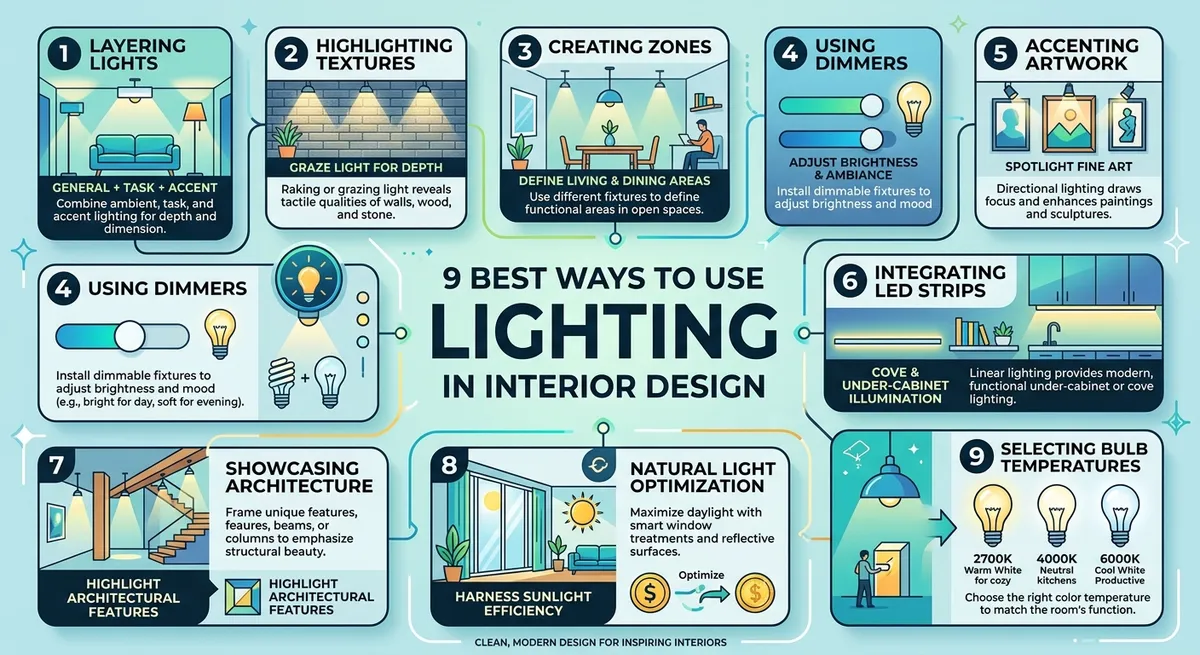
Infographic: 9 Best ways to use lighting in interior design
Key data and insights: 9 Best ways to use lighting in interior design

Strategic Placement for Maximum Impact

The difference between ordinary lighting and extraordinary illumination lies in strategic placement. Understanding precise measurements and optimal positioning transforms any space from merely functional to genuinely sophisticated. Professional luxury kitchens demonstrate how calculated placement creates both beauty and functionality.

Room Type Fixture Category Height from Floor Distance from Wall
Kitchen Pendant Lights (Island) 75-85cm above surface Centre of island
Bathroom Vanity Sconces 165-175cm from floor 75-90cm apart
Living Room Floor Lamps 150-165cm total height 30-45cm from seating
Dining Room Chandelier 75-90cm above table Centre of table

Room-by-Room Lighting Considerations

Kitchens require layered illumination that combines task and ambient elements. Under-cabinet lighting eliminates shadows on work surfaces while pendant lights provide focussed task lighting over islands and breakfast bars. The goal is to avoid harsh contrasts between bright work zones and dim surrounding areas.

Bathroom lighting requires special attention to vanity placement. Wall-mounted sconces positioned at eye level create even, flattering illumination for grooming tasks. Shower areas benefit from recessed downlights with appropriate IP ratings, while ambient lighting softens the overall atmosphere.

Living spaces thrive on flexibility and layering. Conversation areas need gentle ambient lighting that encourages relaxation, while reading nooks require focussed task lighting. Luxury lighting schemes incorporate multiple switching circuits to accommodate different activities and moods throughout the day.

Height and Angle Optimisation

Pendant light positioning follows specific rules that vary by application. Kitchen island pendants hang 75-85cm above the worktop, allowing adequate clearance while providing effective task lighting. Dining room fixtures require 75-90cm clearance above the table surface to prevent glare while maintaining an intimate atmosphere.

Wall sconce placement dramatically affects both functionality and aesthetics. Mounting sconces 165-175cm from the floor creates flattering facial illumination without casting unflattering shadows. Bedroom sconces benefit from slightly lower positioning at 150-160cm to accommodate reading in bed.

Floor lamp positioning requires consideration of both light distribution and traffic flow. Placing lamps 30-45cm from seating ensures adequate reading light while avoiding obstruction. Torchiere-style floor lamps work best in corners where they can bounce light off walls and ceilings for ambient illumination.

Statement Fixtures as Design Focal Points

Statement lighting fixtures serve as architectural jewels that transform spaces from ordinary to extraordinary. These bold design elements illuminate rooms while functioning as sculptural art pieces that capture attention and define the character of an interior. Well-chosen statement fixtures make both aesthetically pleasing and financially rewarding investments in luxury properties.

The power of statement lighting lies in its ability to create immediate visual impact while establishing the design hierarchy within a space. A carefully selected chandelier or oversized pendant light becomes the room's focal point, drawing the eye upward and creating a sense of grandeur that elevates the entire design scheme.

Choosing Sculptural Lighting Elements

Chandeliers remain the ultimate architectural statement, particularly when positioned over dining room lighting design schemes. Modern chandeliers have evolved beyond traditional crystal designs to encompass bold geometric forms, organic shapes, and innovative materials that blur the line between lighting and sculpture.

Oversized pendant lights create a dramatic effect in spaces with high ceilings or open floor plans. These commanding fixtures work particularly well in entrance halls, stairwells, or above kitchen islands where their scale can be fully appreciated. The key lies in choosing pieces that complement existing architectural features.

Unique table and floor lamps function as art pieces that provide both illumination and personality. Consider these sculptural elements as three-dimensional artwork that emits light. They offer flexibility to experiment with bold designs without the commitment of permanent installation.

Balancing Statement Pieces with Overall Design

Scale considerations are crucial when selecting statement fixtures for different room sizes. A general rule suggests that chandelier diameter should equal the room's length plus width in feet, converted to inches. However, this formula serves merely as a starting point for creating proper visual proportion.

Complementing existing architectural features requires careful observation of the room's inherent character. Period properties might benefit from fixtures that echo historical details, while contemporary spaces can accommodate more avant-garde designs. The goal involves creating harmony between the lighting and the architecture rather than forcing incompatible styles together.

Creating visual hierarchy through lighting choices establishes clear focal points and guides movement through the space. Statement fixtures should command attention without overwhelming other design elements, achieving balance through careful consideration of placement, scale, and intensity.
1

Smart Lighting Technology Integration

The luxury interior design landscape has transformed dramatically with the integration of smart lighting technology. An increasing number of luxury homeowners are incorporating intelligent lighting systems into their properties. This shift represents more than a technological upgrade; it fundamentally enhances both functionality and the overall luxury experience.

Smart lighting technology offers unprecedented control over ambience and atmosphere. Modern systems respond to voice commands, smartphone applications, and automated schedules. The sophistication of these solutions allows homeowners to create personalised lighting environments that adapt throughout the day.

Automated Lighting Control Systems

Programmable lighting scenes have revolutionised how we experience interior spaces. These systems allow homeowners to create distinct moods for different occasions with a single command. Dinner party settings can instantly transform to intimate evening ambience. Morning routines become seamless with gradual brightness increases that mirror natural sunrise patterns.

Voice control and smartphone integration provide convenience in modern lighting design. Popular systems like Philips Hue and Lutron Caséta respond to simple verbal commands. Homeowners can adjust brightness levels, change colour temperatures, and activate pre-set scenes without leaving their seats.

Energy efficiency benefits make smart lighting an environmentally conscious choice. LED technology combined with automated scheduling can reduce energy consumption significantly compared to traditional incandescent bulbs. Motion sensors ensure lights activate only when needed. Daylight harvesting systems automatically dim artificial lighting when natural light is abundant.

Personalisation Through Smart Technology

Circadian rhythm lighting supports natural wellness patterns by mimicking the sun's daily colour temperature changes. Cool blue-white light energises morning routines. Warm amber tones promote relaxation during evening hours. This technology particularly benefits those working from home or spending extended periods indoors.

Colour temperature adjustment throughout the day creates dynamic living environments. Morning light begins at 6500K to stimulate alertness. Afternoon settings shift to 4000K for comfortable task lighting. Evening transitions to 2700K warm white that prepares the body for rest.

Integration with comprehensive home automation systems creates seamless luxury interior experiences. Smart lighting coordinates with security systems, climate control, and entertainment centres. Statement lighting in family rooms can automatically dim when film viewing begins and gradually brighten during intermissions.

Creating Ambiance Through Light Temperature

The colour temperature of light profoundly influences the mood and functionality of any interior space. Understanding how different Kelvin ratings affect our perception and behaviour allows designers to create environments that truly serve their intended purpose.

Light temperature works on both psychological and physiological levels. Warm light naturally signals relaxation to our circadian rhythms, while cooler temperatures promote alertness and concentration.

Understanding Kelvin Ratings and Colour Temperature

The Kelvin scale provides a scientific framework for categorising light colour temperature. Warm light, ranging from 2700K to 3000K, creates intimate, cosy atmospheres perfect for living rooms and bedrooms. These golden tones complement natural materials and enhance the warmth of wood finishes.

Cool light between 4000K and 5000K offers excellent colour rendering for task-oriented activities. This temperature range proves particularly effective in kitchens and bathrooms where precision matters. The neutral white light reduces eye strain during detailed work.

Daylight simulation at 5500K to 6500K mimics natural sunlight conditions. These crisp, bright temperatures excel in home offices and study areas where mental clarity becomes paramount.

Room Type Recommended Kelvin Primary Function Atmosphere Created
Living Room 2700K-3000K Relaxation & Socialising Warm & Inviting
Kitchen 3500K-4000K Food Preparation Clean & Functional
Home Office 5000K-6500K Work & Concentration Alert & Energising
Bedroom 2700K-3000K Rest & Intimacy Calm & Soothing

Matching Light Temperature to Room Function

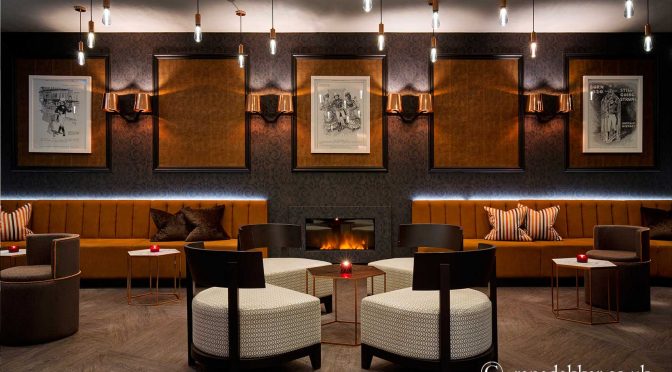
Entertainment spaces benefit from warm lighting schemes that encourage conversation and relaxation. The golden tones create a welcoming environment where guests naturally feel at ease. Consider how entertainment room lighting can transform your space into the perfect gathering place.

Kitchen and bathroom lighting demands higher colour temperatures for safety and functionality. Cool white light reveals true colours when preparing food or applying makeup. This practical approach ensures accuracy in daily tasks while maintaining visual comfort.

Transitional spaces like hallways and staircases work best with neutral temperatures around 3500K. This balanced approach provides adequate illumination without creating jarring contrasts between adjoining rooms.

Maximising Space Perception Through Lighting

Strategic lighting design can significantly transform how we perceive interior spaces. Well-executed lighting techniques can make rooms feel more spacious and inviting by eliminating harsh contrasts and dark corners.

The psychology behind space perception relies heavily on how light interacts with surfaces, shadows, and architectural elements. When light is thoughtfully distributed throughout a room, it eliminates harsh contrasts and dark corners that can make spaces feel cramped.

Techniques for Enhancing Room Size

Uplighting is one of the most effective methods for creating the illusion of height and spaciousness. By directing light towards the ceiling, you draw the eye upward and create the impression of elevated ceilings, even in rooms with standard height dimensions.

Wall washing techniques expand visual boundaries by eliminating sharp shadows along perimeter walls. This approach creates a seamless flow of light that makes walls appear to recede, effectively pushing out the perceived boundaries of the space.

Strategic mirror placement combined with targeted lighting amplifies these effects. Position mirrors opposite light sources or adjacent to windows to reflect and multiply available light throughout the room. The interplay between mirrors and lighting creates depth and dimension that can make even the smallest spaces feel remarkably open.

Highlighting Architectural Features

Grazing light techniques bring textured walls and architectural details to life while creating visual interest and depth. This approach involves positioning light sources close to textured surfaces, allowing the light to skim across the material and emphasise its natural characteristics.

Accent lighting for artwork and collections serves dual purposes in space enhancement. Properly lit focal points create visual anchors that guide the eye through the space, establishing a sense of scale and proportion. Consider how lighting in luxury en suites demonstrates this principle through carefully positioned spotlights that highlight both functional and decorative elements.

Cove lighting offers an elegant solution for enhancing architectural details without overwhelming the space. This indirect lighting method creates a soft, ambient glow that highlights ceiling details, crown moulding, or built-in features while maintaining the room's overall sense of openness and flow.
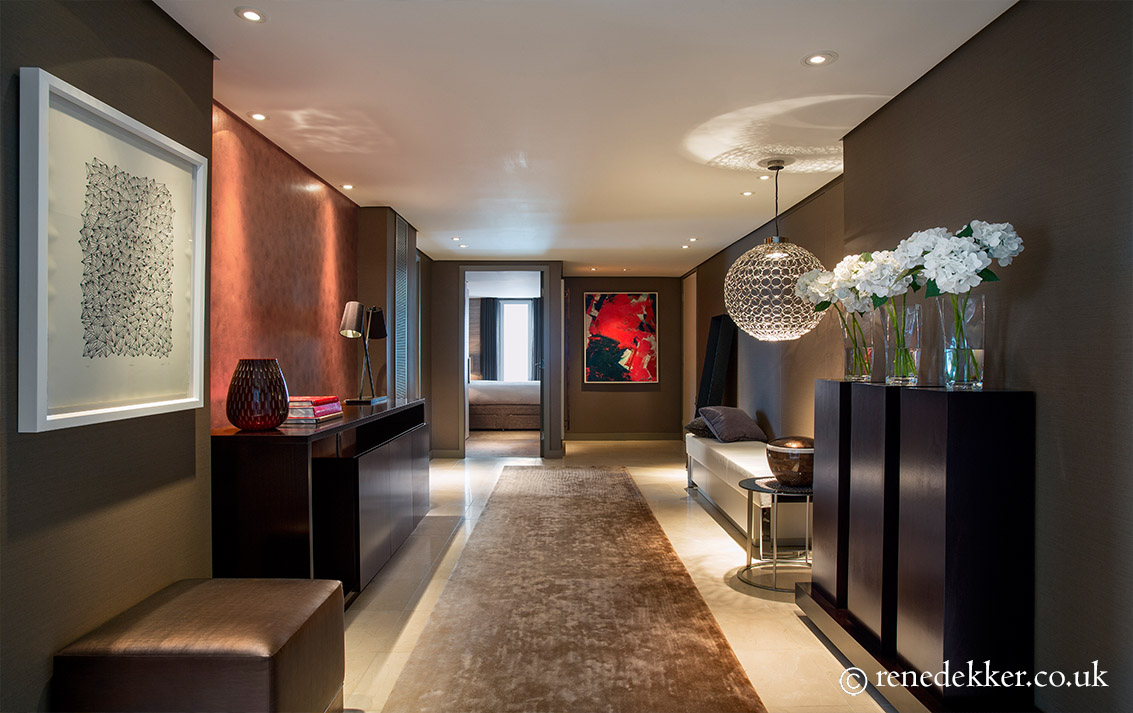
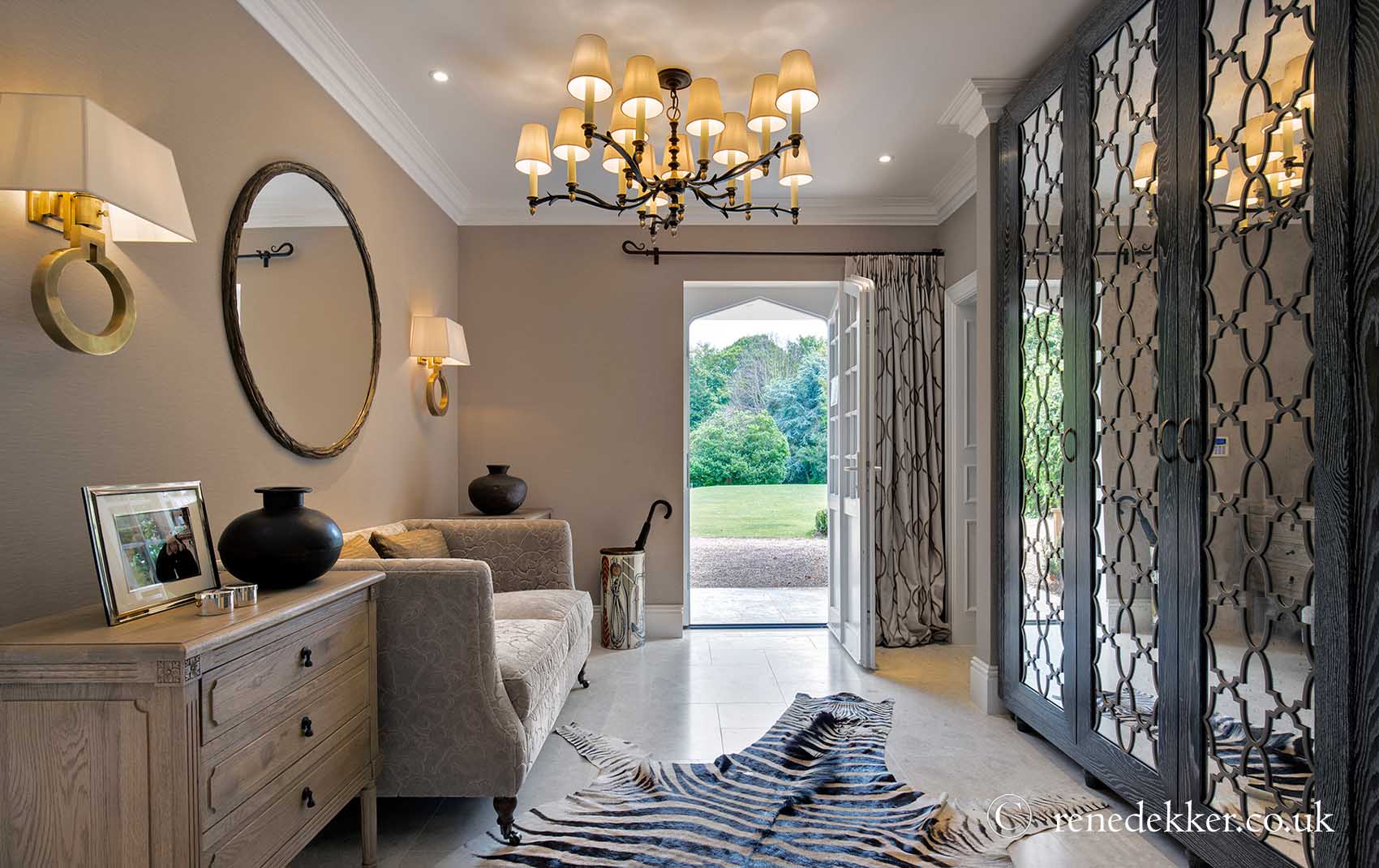
1 West London Penthouse chic entrance hall

Frequently Asked Questions

How many light sources should each room have for optimal lighting design?

For luxury homes, interior design professionals recommend incorporating 3-5 different light sources per room to achieve proper layering. This typically includes ambient lighting (such as recessed downlights or pendant fixtures), task lighting (table lamps or under-cabinet strips), accent lighting (picture lights or wall sconces), and decorative lighting (chandeliers or statement pieces). The exact number depends on the room's size and function, but multiple sources ensure you can create different moods while maintaining functionality throughout various times of day.

What's the biggest mistake homeowners make with interior lighting?

The most common error is relying solely on overhead fixtures, which is a common issue in many residential lighting schemes. This approach creates harsh shadows and fails to establish the layered lighting essential for luxury interiors. Proper lighting design requires combining ambient, task, and accent lighting to eliminate dark corners, highlight architectural features, and create inviting atmospheres. Without this layering, even the most beautifully designed rooms can feel flat and uninspiring.

How much should I budget for professional lighting design in a luxury home?

Professional lighting design for luxury homes varies considerably based on the property's size and complexity. For a comprehensive scheme including fixtures, controls, and installation, costs can range from £15,000-50,000+ depending on your home's scale and specification level. This investment often proves worthwhile, as professionally designed lighting schemes enhance both property appeal and your daily living experience.

Conclusion

Thoughtful lighting design goes beyond aesthetic enhancement; it's a strategic investment that elevates both your daily living experience and property value. The integration of layered ambient, task, and accent lighting creates sophisticated depth, while statement fixtures transform functional necessities into sculptural focal points. Smart technology blends seamlessly with timeless design principles, offering personalised control that adapts to your lifestyle while maximising energy efficiency.

Properly executed lighting can significantly enhance spatial perception and create more inviting environments. However, achieving these results requires expertise that extends beyond DIY capabilities. Professional lighting design considers spatial relationships, colour temperatures, and architectural nuances that amateur approaches often overlook.

Ready to transform your space with lighting that enhances both beauty and functionality? Contact René Dekker today to discover how expertly designed illumination can revolutionise your interior environment and create the luxury atmosphere your home deserves.
Using Copper in Interior Design

Key Takeaways

  • Copper's antimicrobial properties make it ideal for kitchens and bathrooms in luxury residential design.
  • The metal's natural patina develops unique character in interior spaces over time.
  • Copper pairs well with natural materials like stone and wood but needs careful coordination.
  • Placing copper strategically may enhance the aesthetic appeal and potentially increase property values in premium markets.

Copper has become the go-to metal in luxury interior design, combining timeless elegance with practical benefits. This warm and shiny metal isn't just following trends; it's leading them. Designers in the UK are increasingly using copper for its unique charm.

What makes copper special is its ability to blend beauty and function. Unlike other metals that focus only on looks, copper also has antimicrobial properties, is durable, and develops a living finish that gains character over time.

This guide will show you how to use copper's potential in your home projects, from eye-catching lighting to architectural details that elevate any space.

The Rising Popularity of Copper in Contemporary Interior Design

Copper is now the top choice for homeowners and high-end designers. Industry trends indicate growing copper usage in luxury residential projects over recent years. This shift reflects a move away from traditional brass and bronze toward materials that offer both beauty and function.

The rise of copper isn't just a trend. Many luxury designers now regularly include copper elements in their work, reflecting its growing popularity among premium design firms. This marks a clear change from the past when gold-toned fixtures were the norm.

Market Trends and Industry Adoption

Homeowners today clearly prefer copper over traditional options. Design professionals often prefer copper in modern luxury settings compared to brass. This preference comes from copper's ability to match both warm and cool colour schemes while keeping its unique character.

Copper's versatility is impressive. It works well with both industrial and classic styles, making it suitable for many design approaches. Plus, copper installations may enhance home values in the luxury market, adding to its appeal.

Why Copper Appeals to Modern Homeowners

Beyond looks, copper offers practical benefits that matter to health-conscious homeowners. Its natural antimicrobial properties are useful in kitchens and bathrooms, where cleanliness is key. This blend of beauty and utility helps explain copper's growing popularity in luxury interior design.

Investment value is another strong point. Unlike painted finishes that wear down, copper develops character through natural patina. This means copper installations actually improve with age, creating unique surfaces that reflect each home's environment and use.

Copper's Unique Aesthetic Properties

This metal ranges from bright rose gold to deep bronze, giving designers great flexibility in colour choices. The natural patina that develops creates surfaces that change over time, adding visual interest that static finishes can't match. This quality fits well with textural design principles that focus on depth and variety.

Copper also interacts with light in a special way. Its warm reflective qualities create ambient lighting effects that enhance a room's atmosphere without needing extra fixtures. Additionally, its thermal conductivity helps in lighting and heating applications.

Industry experts note that copper's patina development adds unique character to interior spaces over time.

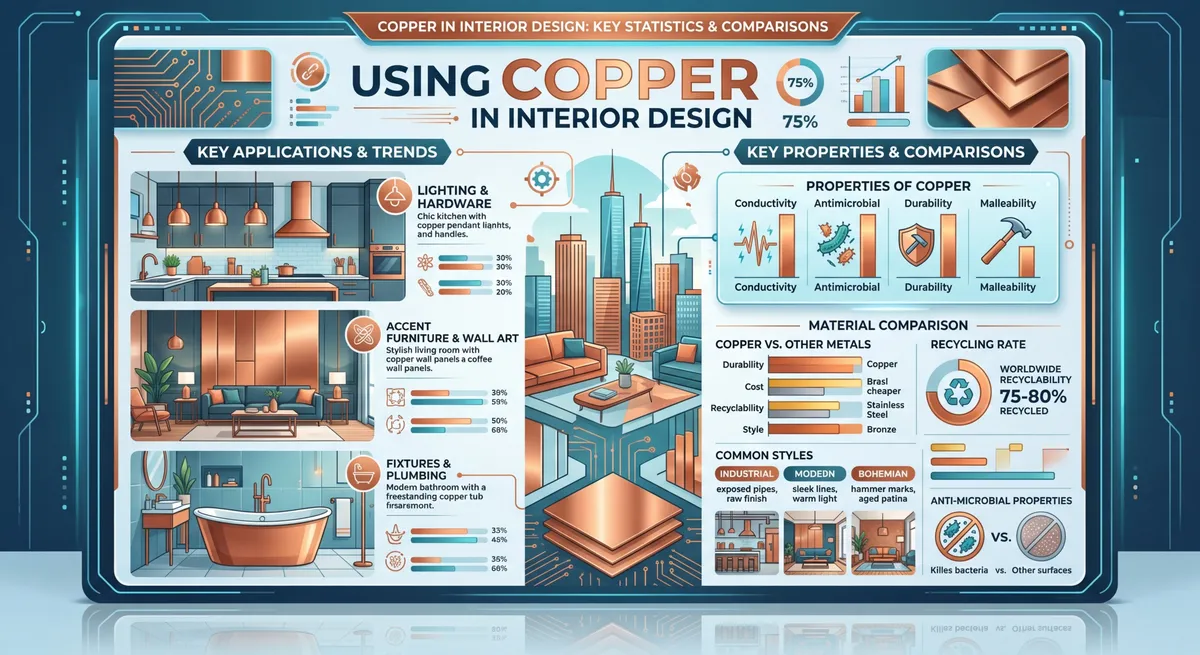
Infographic: Using Copper in Interior Design
Key data and insights: Using Copper in Interior Design

Understanding Copper's Functional Benefits in Interior Applications

Copper offers impressive functional advantages in luxury interior design beyond its looks. The metal has unique properties that make it especially valuable in high-end residential settings. Knowing these benefits helps designers make smart choices about using copper.

Property Copper Brass Stainless Steel Bronze
Antimicrobial Effectiveness Copper has been shown to have antimicrobial properties that reduce bacteria over time. Moderate (60-70% copper content) None Limited (varies by alloy)
Thermal Conductivity 401 W/mK (Excellent) 109 W/mK (Good) 16 W/mK (Poor) 26 W/mK (Moderate)
Durability Rating High (natural patina protection) High (corrosion resistant) Very High (rust resistant) Very High (weather resistant)

Antimicrobial Properties and Health Benefits

Copper's natural antimicrobial properties help reduce bacterial presence over time. This makes it very useful in kitchens and bathrooms, where cleanliness is vital. The metal destroys harmful microorganisms through ionic release, creating safer environments for families.

These health benefits go beyond just surface contact. Copper fixtures and surfaces continuously help keep spaces cleaner. This natural protection is increasingly important as homeowners focus on wellness in their living areas.

Thermal Conductivity and Lighting Performance

Copper's excellent thermal conductivity opens up great opportunities for lighting and heating. The metal spreads heat evenly, making it perfect for radiant heating systems and ambient lighting designs that enhance colour schemes. This property allows for more efficient energy use while creating comfortable environments.

This efficient heat conduction means lighting fixtures stay cooler while spreading warmth effectively. This creates comfortable spaces without hot spots or uneven temperatures.

Durability and Longevity Characteristics

Copper develops a protective patina over time, which actually makes it more durable. This natural oxidation creates a barrier against further corrosion. The metal performs well in various conditions, from humid bathrooms to dry living areas.

With proper installation, maintenance stays minimal. Regular cleaning with suitable products helps preserve copper's look while allowing for natural patina development. This balance between preservation and evolution makes copper especially fitting for luxury applications where long-lasting quality is important.

Strategic Copper Applications in Different Room Settings

Copper's versatility stands out when placed in different rooms, creating a luxurious feel while respecting each space's unique needs. The key is understanding how copper's natural qualities enhance specific environments and daily activities.

Kitchen Design Integration

The kitchen is where copper shines the most. Its antimicrobial properties and heat conductivity offer real benefits. Copper sinks develop a beautiful patina over time, and copper accents on countertops provide striking focal points without overwhelming the space.

Range hoods in copper create stunning centerpieces that blend form and function. The metal's ability to conduct heat makes it perfect for the kitchen, while backsplash installations add warmth against cooler materials like marble or granite. Coordinating hardware is important: copper cabinet handles, faucet fittings, and pendant lights should have similar finishes to keep the look cohesive.

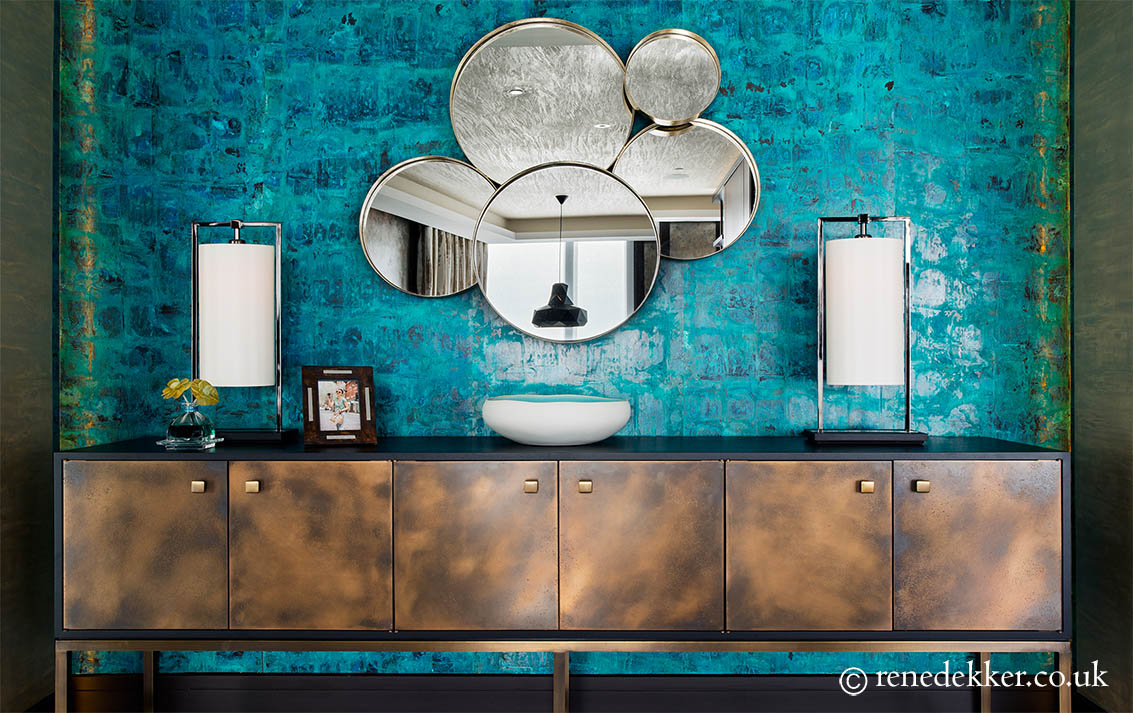
Luxury Bronze Cabinet

Bathroom Luxury Applications

Bathrooms showcase copper's luxurious side with statement pieces like freestanding bathtubs and vessel sinks. These elements turn ordinary bathrooms into spa-like retreats, with copper's natural warmth creating cozy atmospheres.

Faucets and shower fixtures in copper need careful thought regarding water quality and maintenance. Mirror frames can integrate copper subtly without a big commitment, while smart lighting placement enhances copper's reflective qualities throughout the space.

Living Spaces and Accent Applications

Living areas benefit from copper's decorative potential through thoughtfully chosen statement pieces. Copper chandeliers and pendant lights create dramatic focal points, and their warm glow improves evening ambiance.

Decorative screens and room dividers add beauty and function, especially in open-plan spaces where copper helps define areas without blocking light. Fireplace surrounds highlight copper's architectural qualities, combining heat resistance with design sophistication. These installations work well when paired with complementary soft furnishings that echo copper's warm tones.

Copper Lighting Design and Fixture Selection

Copper lighting is one of the primary uses of this luxury metal in interior design, representing a significant portion of copper installations. The warm, reflective qualities of copper create a unique atmosphere that transforms any space into something special.

The versatility of copper lighting goes beyond simple light. This metal's natural ability to develop patina means your fixtures will evolve over time, creating a unique character that synthetic materials can't match.

Pendant Lights and Chandeliers

Statement copper pendants serve as the centerpiece of dining rooms and kitchen islands, where their warm glow enhances both conversation and cooking experiences. Scale is key when picking these fixtures: a dining table needs pendants that span about two-thirds of the table's width for the right proportion.

Kitchen islands look great with multiple smaller pendants instead of one large piece, creating visual rhythm while providing adequate task lighting. The finish you choose will determine if your fixtures keep their bright copper look or develop the verdigris patina that many designers love for its authentic, aged appeal.

Think about how metallic elements like gold work in design when planning your copper lighting scheme. The mix of different metals can create sophisticated layering effects.

Task and Accent Lighting Applications

Under-cabinet copper strip lighting adds both style and functionality in kitchens, casting warm light across worktops while showcasing the metal's natural beauty. Copper wall sconces provide cozy lighting for reading nooks and hallways, where their reflective surfaces amplify available light.

Copper's weather-resistant properties make it great for outdoor lighting, bridging indoor and outdoor schemes. Architectural lighting with copper fixtures can highlight structural features while keeping a consistent design throughout your home.

Integration with Smart Lighting Systems

Modern copper fixtures easily work with smart lighting technology, with dimming features that enhance the metal's warm tones at lower light levels. Colour temperature control lets you shift from cool morning light to warm evening glow, maximizing copper's natural warmth.

Updating existing copper fixtures with smart components is a cost-effective way to modernize your space. Just like grey provides a neutral backdrop for bolder design elements, integrating smart technology allows copper's beauty to shine while adding contemporary functionality.

Material Pairing and Design Coordination

Copper's versatility makes it a great choice for luxury interior design, but success depends on careful material coordination. Knowing how copper interacts with different surfaces and finishes helps you achieve the sophisticated look you want. The key is balancing copper's warm tones with materials that complement it while avoiding potential compatibility issues.

Proper material pairing goes beyond just looks. It also considers factors like thermal expansion, chemical reactions, and long-term durability. This approach ensures your copper elements stay beautiful and functional for years.

Natural Material Combinations

Stone and marble work beautifully with copper fixtures and accents. The cool, neutral tones of marble contrast elegantly with copper's warmth, while natural stone textures add depth to the overall design. Travertine and limestone are especially effective, as their earthy colours complement copper's natural patina.

Wood grain coordination enhances copper's warmth in luxury interiors. Rich walnut and mahogany create elegant pairings, while lighter oak and ash offer a contemporary contrast. The natural oils in wood help protect nearby copper surfaces from excessive oxidation, making this combination both beautiful and practical.

Textile and fabric pairing strategies focus on enhancing copper's character. Linen and silk fabrics in cream, sage, or deep burgundy highlight copper's natural tones. Velvet upholstery in jewel tones creates striking focal points when paired with copper lighting or hardware.

The key to successful copper integration is understanding how it interacts with other metals and finishes. Copper pairs well with natural materials like stone and wood, but requires careful consideration when combined with other metals to avoid galvanic corrosion in humid environments.

Metal Mixing and Coordination

Avoiding galvanic corrosion is critical in humid areas like bathrooms and kitchens. When copper contacts other metals in moisture, electrochemical reactions can cause damage. Proper insulation and careful material selection prevent these issues while keeping the design intact.

Successful copper and steel combinations need strategic planning and protective finishes. Stainless steel appliances pair well with copper accents when separated by non-conductive materials. This allows you to enjoy the colour contrast without compromising either metal's durability.

Brass and bronze coordination creates a cohesive metal scheme in luxury spaces. These copper alloys share similar undertones, making transitions feel natural. Varying the proportions and finishes adds visual interest while keeping harmony throughout the design.

Colour Palette Integration

Complementary colour schemes with copper tones focus on blues, greens, and deep purples. These colours create striking contrasts that highlight copper's warmth without overwhelming the space. Navy blue enhances copper's golden undertones in sophisticated interior designs.

Neutral palette strategies use copper as the primary accent colour against whites, greys, and beiges. This allows copper's natural beauty to shine while maintaining a clean, contemporary look. Warm whites and cream tones create the best backdrop for copper elements.

Material Pairing Compatibility Best Applications Potential Issues
Marble/Stone Excellent Countertops, backsplashes Staining from patina runoff
Hardwood Excellent Cabinetry, flooring accents Water damage from cleaning
Stainless Steel Good with barriers Kitchen applications Galvanic corrosion
Glass Excellent Lighting, mirrors Thermal expansion differences

Bold colour accent coordination uses copper to link dramatic colour choices. Deep emerald greens, rich burgundies, and charcoal greys all benefit from copper's warming influence, creating sophisticated colour stories that feel both bold and balanced.

Maintenance and Care for Copper Interior Elements

Copper's natural beauty needs thoughtful maintenance to keep its shine and function. Unlike other metals, copper develops character over time, so proper care is essential to achieve the look you want. Understanding the basics of copper maintenance helps homeowners make informed choices about preservation versus natural aging.

Cleaning and Preservation Techniques

Regular maintenance is key to effective copper care. Most interior copper elements need attention every six to twelve months, depending on environmental conditions and usage. High-traffic areas or pieces exposed to moisture may need more frequent care.

Cleaning methods vary based on your desired finish. To keep bright copper surfaces, gently clean with mild soap and soft cloths to avoid scratching while removing grime. Avoid abrasive cleaners or steel wool, which can permanently damage the metal's surface.

Choosing between preservation and restoration is an important decision. Some homeowners prefer the warm glow of polished copper, while others like the natural patina. This choice affects your entire maintenance approach and should align with your overall design vision.

Patina Development Management

Natural aging happens gradually as copper reacts with oxygen and moisture. This process creates the blue-green patina associated with aged copper, although interior conditions often produce subtler colour changes. Knowing this timeline helps set realistic expectations for your copper elements.

Controlled patina acceleration techniques let designers achieve aged appearances more quickly. Professional treatments can create uniform patina effects in days instead of years. However, these processes need expertise to ensure consistent results across large installations.

Protective coating applications offer another management option. Clear lacquers can stop patina development completely, keeping copper's initial appearance indefinitely. Consider this for statement pieces where consistent colour is important to your design scheme.

Professional Maintenance Services

Professional restoration is necessary when damage goes beyond routine maintenance. Deep scratches, severe tarnishing, or structural issues need specialized knowledge and equipment. Engaging professionals early can often prevent minor issues from becoming costly problems.

Costs for ongoing maintenance vary widely based on installation size and complexity. Simple cleaning services are much cheaper than full restoration projects. Budget for annual maintenance as part of your copper investment to ensure long-term satisfaction.

Choosing a warranty and service provider requires careful consideration. Look for specialists with extensive copper experience and proven success. Proper credentials and insurance protect your investment while ensuring quality work throughout the maintenance process.

Copper Leaf Luxury Wall Design

Sustainable Copper Sourcing and Environmental Considerations

Modern luxury interior design clients want to know where materials come from and how they affect the environment. This change shows a growing awareness of sustainability in the design world. Copper has both challenges and advantages that designers need to understand.

Ethical Sourcing and Supply Chain Transparency

High-end design firms now focus on sustainable sourcing practices. Industry estimates suggest that about 70-75% of luxury projects include sustainability requirements. Certification standards help ensure ethical copper sourcing, but verifying these claims can be complicated. These standards look at mining practices, worker conditions, and environmental compliance throughout the supply chain.

Transparency in the supply chain is essential for luxury design. Clients want to know where their materials come from and how they're made. This requirement can affect project timelines and costs, but it's increasingly necessary for clients who care about ethics as much as aesthetics.

Recycling and Circular Design Principles

Copper stands out in sustainable design because it can be recycled endlessly without losing quality. This makes it valuable for circular design approaches. Reclaimed copper is becoming popular in interior design, offering rich colours and historical charm while lowering environmental impact.

Planning for the end of a copper installation ensures materials can be recovered and reused. Consider these circular design strategies:

  • Design for easy disassembly with removable copper parts
  • Choose joining methods that keep the material intact
  • Document copper grades and alloys for future recycling
  • Work with suppliers who accept returned materials

Environmental Impact and Carbon Footprint

Copper production has serious environmental impacts, including energy-intensive extraction and refining processes. However, the metal's long lifespan often balances out these initial production effects. Sourcing copper locally can cut down on transportation emissions and support local economies.

The durability of copper is key for sustainable design. With proper care, copper installations can last for decades or even centuries, spreading their environmental impact over a long time. This makes copper ideal for permanent architectural features where replacing materials would be costly and wasteful.

Frequently Asked Questions

How long does it take for copper to develop its natural patina in interior applications?

Copper's patina develops at different rates depending on location and environment. In humid areas like bathrooms or kitchens, you'll see colour changes within weeks. In drier spaces, it may take several months to develop its character. Frequently touched items like door handles and taps develop patina faster due to natural oils from hands, creating beautiful wear patterns that enhance the metal's luxury appeal.

Can copper fixtures be used safely in bathrooms with high humidity levels?

Copper works well in humid bathroom environments and actually benefits from moisture that speeds up its natural patina development. Proper installation needs good ventilation and quality sealing around joints to prevent water damage to nearby materials. The metal's natural antimicrobial properties make it great for bathrooms, eliminating about 99% of bacteria within two hours of contact. Regular cleaning helps maintain its shine.

What is the typical cost difference between copper and other luxury metal finishes?

Copper usually costs 15-25% more than brass, but it’s still much cheaper than premium finishes like brushed gold or platinum. The investment is worth it considering copper's durability, antimicrobial benefits, and potential to increase property values by 3-5% in high-end markets. With copper use in UK interior design projects rising 25-30% in recent years, it has become the preferred choice for 60-65% of homeowners over traditional brass options.

Conclusion

Copper's unique mix of antimicrobial properties and evolving beauty makes it a great choice for luxury homes. From kitchen surfaces that resist bacteria to bathroom fixtures that develop a unique patina over time, this versatile metal offers both practical benefits and elegant style.

Success comes from thoughtful material choices. Copper pairs well with natural stone and wood but needs careful selection to avoid clashing finishes. With good planning and sustainable sourcing, copper applications can boost property values by 3-5% while fitting with modern luxury design standards.

Are you ready to explore copper's potential in your luxury residential project? Talk to experienced interior design professionals who understand both the technical needs and aesthetic possibilities of this amazing metal.